
The dream-run in railway stocks may soon run out of steam, caution analysts. The rally, which has lasted nearly a year, may meet time-wise correction post the Union Budget announcements as investors begin scalping profits. "There is going to be a build-up in expectations for the sector from the Union Budget, which is still two-odd months away.

rediffGURU Ulhas Joshi answers your personal finance and mutual fund queries

Chief Information Security Officer (CISO) of HDFC Bank, Sameer J Ratolikar, will answer all your queries about secure banking in an online chat with readers on April 27, between 2 pm and 3 pm.

The rupee rose by 12 paise to close at 79.78 against the US dollar on Monday due to a weak dollar in overseas markets and an improved appetite for riskier assets. Stronger regional currencies also supported the rupee sentiment ahead of the US Fed policy decision on Wednesday. Weak domestic equities and FII outflows, however, capped sharp gains. At the inter-bank forex market, the local unit opened at 79.86 against the greenback and moved in a range of 79.70 to 79.87 in the day trade.

Benchmark equity indices Sensex and Nifty closed higher on Friday after two days of fall, helped by buying in metal, telecom and auto stocks amid a firm trend in global markets. Automakers led by Maruti Suzuki India, Hyundai, Mahindra & Mahindra reporting robust wholesales of passenger vehicles and GST collections crossing Rs 1.50 lakh crore for the third straight month in May also added to the optimism. The 30-share BSE Sensex climbed 118.57 points or 0.19 per cent to settle at 62,547.11.

The only caveat is that your will should be a simple one.
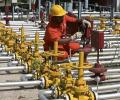
India's natural gas production is projected to jump by 52 per cent to 122 million standard cubic metres per day by 2024 as state-owned Oil and Natural Gas Corporation (ONGC) and Reliance Industries Ltd-BP combine raise output from the KG basin fields. Natural gas production in 2019-20 was 85 mmscmd, which is estimated to have fallen to 80 mmscmd in the following year, HDFC Securities said in a report. The output is projected to rise in the current fiscal that started on April 1 to 93 mmscmd, 107 mmscmd in the following year and 122 mmscmd in 2023-24, the brokerage estimated.

'The deal pipeline across products is robust for 2024.'

Sliding for the fifth straight session, the rupee fell 3 paise to close at a fresh lifetime low of 79.06 against the US dollar on Thursday amid a strong greenback overseas and unrelenting foreign fund outflows. At the interbank forex market, the local unit opened at 78.92 against the greenback and witnessed an intra-day high of 78.90 and a low of 79.07. It finally settled at 79.06, down 3 paise over its previous close of 79.03.

'Those trying to use these funds for quick gains should avoid them due to risk of being late to the party.'

Despite the uncertainties created by rising bond yields and oil prices, fund managers have been proactively deploying fresh flows into the equity market. The cash available with equity fund managers, which has remained lower at around 5 per cent in the past few months, hit a 16-month low of 4.8 per cent in September, shows a Motilal Oswal Financial Services report. Cash holdings in equity schemes had topped 6 per cent in February amid subdued equity market sentiment.

rediffGURU Ulhas Joshi answers your mutual fund queries.

rediffGURU Ramalingam Kalirajan answers your personal finance queries.
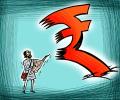
The rupee slipped by 4 paise to close at 77.59 (provisional) against the US dollar on Tuesday, weighed down by a negative trend in domestic equities and unabated foreign fund outflows. At the interbank foreign exchange market, the rupee opened lower at 77.56 against the greenback, and finally settled at 77.59, down 4 paise over its previous close. During the trading session, the rupee touched an intra-day low of 77.67 and a high of 77.51.

Equity indices failed to hold on to their gains in see-saw trade on Tuesday, ending in the red for the third straight session despite a tentative recovery in global equities. The rupee too bounced back from historic lows, but the overall sentiment remained risk-averse amid concerns over economic recovery in a high interest rate scenario. The 30-share BSE Sensex had a choppy start but gained momentum in mid-session trade. However, it succumbed to selling pressure towards the fag end to close 105.82 points or 0.19 per cent lower at 54,364.85. On similar lines, the broader NSE Nifty declined 61.80 points or 0.38 per cent to finish at 16,240.05.

The rout in Adani Group stocks after US-based short seller Hindenburg Research released a report on January 24 has sparked a rebound in trading activity this month. The average daily trading volume (ADTV) for the cash segment (both NSE and BSE combined) so far in February stands at Rs 59,346 crore, and is around 15 per cent more than the previous month's tally of Rs 51,844 crore, which was the lowest in six months. The ADTV for the futures and options (F&O) segment rose to a record Rs 204 trillion (notional turnover) against Rs 202 trillion in January.
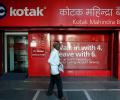
Cracking down on repeated non-compliance of IT norms, the RBI on Wednesday barred Kotak Mahindra Bank from onboarding new customers through its online and mobile banking channels and issuing fresh credit cards with immediate effect after the regulator found "serious deficiencies" in the lender's IT risk management. These actions, the RBI said, are necessitated based on significant concerns arising out of Reserve Bank's IT examination of the bank for the years 2022 and 2023 and the continued failure on part of the bank to address these concerns in a comprehensive and timely manner.

Mutual funds (MFs) are lining up distinguished new fund offerings (NFOs) for the next financial year to win over investors after a lukewarm response to product launches in the 2022-23 financial year (FY23). NFOs drew a lukewarm response in FY23 as launches were mostly in the passive debt space, which has a comparatively lower popularity among retail investors. The limited launches in equity space also failed to rake in huge sums due to subdued investor sentiments in a volatile market.

Do you have financial planning or income tax queries? Ask rediffGURU Anil Rego.

The information and technology (IT) sector, which has been going through a rough patch lately, was among the top draws for equity mutual funds (MFs) in July. MF schemes together invested a net of Rs 1,800 crores in IT stocks last month after pulling out around Rs 700 crore from the sector in June, according to a report by ICICI Securities.

Brokerages are expanding the universe of stocks they cover amid a boom in the market. Several stocks in the mid-cap universe are now tracked by more analysts than they were a year ago. For instance, SBI Cards and Payment Services is now tracked by 17 brokerages, compared to just four a year ago.

In a reprieve for HDFC Bank, Securities and Exchange Board of India on Thursday allowed the bank to open new demat accounts saying there was no need to continue its earlier directions that barred the bank from opening new accounts.

In the Sensex pack, HCLTech rose the maximum by 3.12 per cent, followed by ITC which gained 2.73 per cent and M&M went up 2.61 per cent. TCS climbed 2.44 per cent. Tech Mahindra, Wipro, L&T and Maruti were among the other major gainers.

Except for Westlife Foodworld (Westlife), a weak 2022-23 (FY23) January-March (fourth quarter, or Q4) quarter performance and a muted near-term outlook led to a downward revision of earnings estimates for quick-service restaurant (QSR) players. Brokerages have slashed estimates by as much as 10 per cent for 2023-24 (FY24) and 2024-25 (FY25). The downward revisions have weighed on the performance of listed players, who have underperformed the market with low single-digit returns over the past month.
If the outcome of the elections is as expected, markets, which have lost hope on the government, will start discounting a brighter future
Some media reports stated that Rohan has been designated as a vice president, which is a relatively senior position in the company.

Trading in stock markets this week will be majorly influenced by the upcoming quarterly earnings from IT majors TCS and Infosys, along with global trends, analysts said. Besides, global oil benchmark Brent crude, rupee-dollar trend and trading activity of foreign investors would also dictate the movement, they said. "On the domestic front, all eyes will be on the beginning of corporate performance for the third quarter of the current fiscal year.

The stock of Aditya Birla Fashion Retail is down 10 per cent from its February high. Even as the revenue performance of the apparel retail major in the October-December quarter's for the 2022-23 financial year (Q3FY23) was better than expected, the company saw brokerage downgrades, given the weak operating performance and the pressure on margins. This the second consecutive quarter of margin miss despite strong traction on the sales front.

rediffGURU Dev Ashish answers your personal finance and mutual fund queries

Dalal Street investors became richer by more than Rs 16.36 lakh crore this year as the equity market scaled new highs despite persistent geopolitical uncertainties and inflation worries. Analysts attributed better macroeconomic fundamentals, the confidence of retail investors and foreign investors investing again in the domestic equities towards the latter half of 2022 as the key factors that led to the outperformance of the Indian market in comparison to many other stock markets worldwide. During the initial part of the year, markets were jolted by the Russia-Ukraine war.
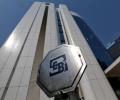
Capital markets regulator Sebi has kept in 'abeyance' the proposed initial share sale of securities depository NSDL. However, the Securities and Exchange Board of India (Sebi) did not clarify further. The National Securities Depository Ltd (NSDL) filed its preliminary papers with the capital markets regulator on July 7.

'We are working with a few housing finance companies to drive affordable lending because that's where we believe our sweet spot is.'
From the Sensex pack, NTPC, Tata Motors, Larsen & Toubro, Bajaj Finserv, Bharti Airtel, HDFC Bank, Reliance Industries, Titan, Power Grid and State Bank of India were the major gainers. ITC, UltraTech Cement, Tech Mahindra, Tata Steel, Wipro, Tata Consultancy Services and JSW Steel were among the laggards.

rediffGURU Ulhas Joshi answers your mutual fund queries.
The Russia-Ukraine conflict, which has spooked financial markets globally, will set the tone for Dalal Street this week amid concerns over energy prices and foreign fund outflows, analysts said. Participants will also track key macroeconomic signals like GDP estimates and PMI data for manufacturing and services sectors to be announced this week, they added. "With earnings season behind us and given the overall sentiments, markets are expected to move in sync with global peers in the coming week. "A close eye will be kept on the developments concerning the Russia - Ukraine crisis and considering the inflation overhang, market participants will also observe movements in energy prices," said Shrikant Chouhan, Head of Equity Research (Retail), Kotak Securities Ltd.

Global trends, trading activity of foreign investors and movement of oil benchmark Brent crude would dictate terms in the domestic markets this week, analysts said. Equity markets, which fell nearly 3 per cent last week, may face volatile trends amid the monthly derivatives expiry on Thursday. "This week marks the September month Futures and Options (F&O) expiry, which is expected to bring about volatility in the market," said Santosh Meena, Head of Research, Swastika Investmart Ltd.

rediffGURU Dev Ashish answers your personal finance and mutual fund queries.

It has been a slow 2022 thus far for the primary markets. In the last 8 months, only 16 companies have raised Rs 40,311 crore via the initial public offer (IPO) route, data from PRIME Database suggests. In comparison, 63 companies had raised a cumulative Rs 1.18 trillion via the IPO route in 2021. A large part of the funds raised in 2022 were on account of the two IPOs - Life Insurance Corporation of India (LIC) and logistics firm Delhivery - that raised a total of over Rs 26,000 crore between themselves.

rediffGURU Ulhas Joshi answers your personal finance and mutual fund queries.

The benchmark Sensex is 2.4 per cent shy of a new lifetime high but the market capitalisation (m-cap) of all companies listed on the BSE is already in the record books. At Thursday's (August 18) closing price, the total m-cap of 4,776 firms on the BSE stood at Rs 280.5 trillion, surpassing the previous high of Rs 280 trillion on January 17. This, even if the Nifty Midcap 100 is currently 5.4 per cent below its lifetime high, while the Nifty Smallcap 100 index is down over 20 per cent.
